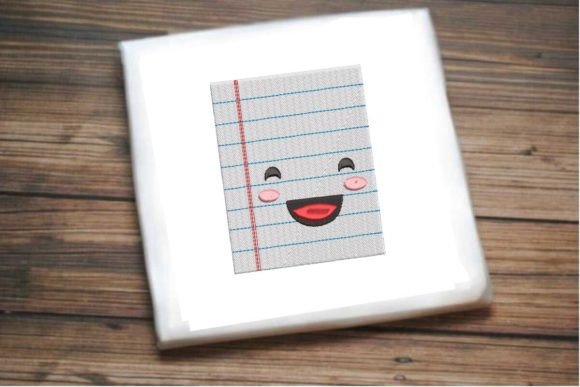
Cute White Paper
A Delightful Embroidery Design for School and Beyond
As a designer who’s stitched through countless embroidery projects, I always start by assessing the mood and visual language of a design. Cute White Paper immediately strikes me as a charming, whimsical piece that exudes a sense of simplicity and nostalgia. The image of a mignone white paper is both familiar and endearing—perfect for those who love the aesthetic of school supplies and educational themes. It's not just a design; it's a statement of creativity and care.
The First Impression: A Warm and Whimsical Presence
Cute White Paper feels like a gentle reminder of childhood learning moments. The clean lines and soft curves of the paper evoke a sense of calm and focus. The layout is balanced, with attention to detail in the edges and corners, which speaks to the meticulous craftsmanship behind it. This design doesn’t just look good—it feels intentional and purposeful.
Its visual personality is ideal for projects that aim to be both functional and decorative. Whether it’s a custom tote bag, a personalized baby item, or a patch for a craft fair, Cute White Paper has the potential to enhance the overall look without overwhelming the product.
Real-Life Application: Testing the Design on a Custom Tote Bag
Let’s imagine I’m preparing a custom embroidered tote bag for a local boutique. The client wants something that feels both stylish and approachable—something that can serve as a daily companion while also being a conversation starter. Cute White Paper fits this vision perfectly.
I’d begin by testing the design on a scrap piece of fabric to ensure the stitch density and placement are consistent. The file seems well-structured, with clear outlines and smooth transitions between fill and running stitches. The satin stitch work on the paper adds a subtle texture that brings depth without being too bold.
Next, I’d consider thread color contrast. A light pastel or neutral thread would complement the design, allowing the white paper to stand out while maintaining a cohesive look. However, if the fabric is dark, I’d recommend using a contrasting thread color to ensure visibility.
Considerations for Real-World Use
While Cute White Paper is versatile, there are some scenarios where it might require extra care. For instance, using it on thin or stretchy fabrics could lead to distortion, especially in areas with dense stitching. In such cases, proper stabilizer use becomes crucial. A tear-away or water-soluble stabilizer would help maintain the shape and integrity of the design during stitching.
Additionally, the design may not perform well on small hoop sizes. If the embroidery is intended for a compact area, like a cap or a patch, the details might get lost or compressed. It’s important to check the hoop size compatibility before committing to a large-scale project.
Another consideration is the use of the design on curved surfaces. While Cute White Paper looks great on flat items like tote bags or sweatshirts, its performance on curved surfaces like caps or hats might be less optimal. The corners and edges could stretch or distort, affecting the final appearance.
Visual Appeal and Product Value
Cute White Paper contributes positively to the visual appeal of any project. Its simplicity allows it to blend seamlessly into various styles, from minimalist to playful. When used on a handmade product like a pillow cover or kitchen towel, it adds a touch of personality without overpowering the item.
From a customer perspective, the design is likely to be well-received. People often appreciate the nostalgic and educational elements of school-themed embroidery, especially when it’s presented with care and attention to detail. It has the potential to become a recognizable brand element, especially for Etsy sellers or small shop owners looking to build a unique identity.
However, it’s important to remember that the success of a design isn’t just about aesthetics—it’s also about functionality and durability. A well-stitched design that maintains its shape and clarity after multiple washes is essential for products that will be used regularly, like baby clothes or holiday gifts.
Practical Designer Notes for Success
Before using Cute White Paper in a commercial or personal project, I recommend a few key steps:
- Test on scrap fabric to assess stitch quality and alignment.
- Check thread color contrast against the fabric background.
- Review stitch density to ensure clarity and even coverage.
- Confirm hoop size to avoid distortion or compression.
- Inspect small details like lettering and corners for accuracy.
- Test in black and white mockups to evaluate design composition.
- Use proper stabilizer to maintain fabric stability during stitching.
- Ensure licensing compliance if selling finished items or digital products.
These steps will help ensure that Cute White Paper performs as expected, whether it’s for a single handmade gift or a line of commercial products.
Conclusion: A Versatile Design for Creative Projects
Cute White Paper is more than just an embroidery design—it’s a thoughtful addition to any creative project. With its clean, charming aesthetic, it has the potential to elevate everything from custom apparel to personalized gifts. By understanding its strengths and limitations, designers and makers can confidently incorporate it into their work, knowing it will add value, charm, and professionalism to their handmade offerings.